
Fixing AI mistakes – Real on model images from flatlays for a European luxury tech brand
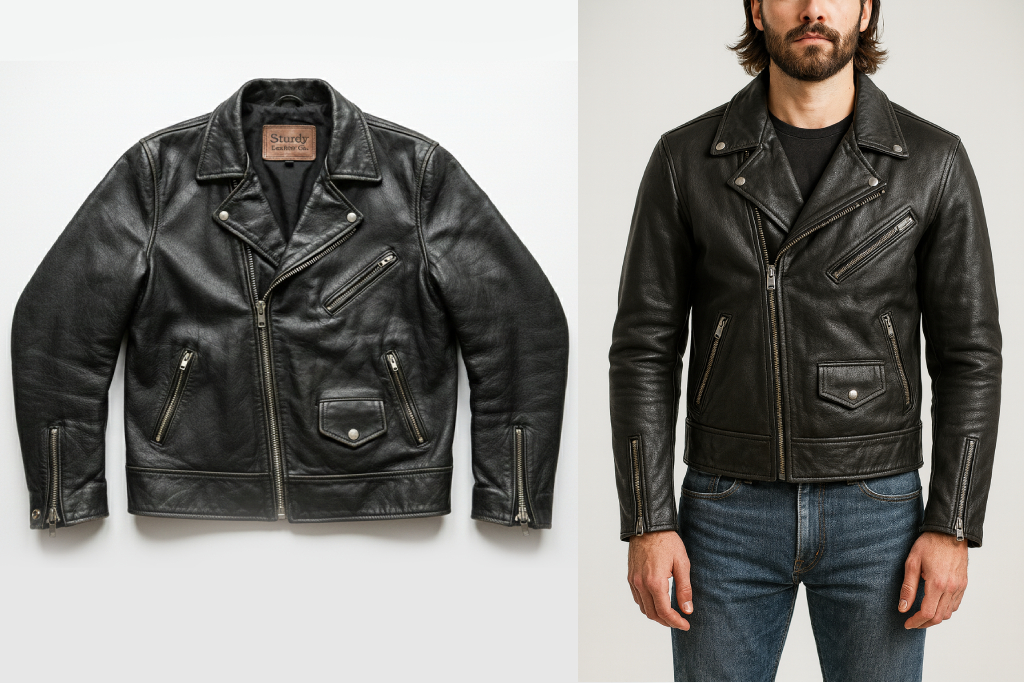
A European AI company built a system to convert flatlay product photos into on-model images at scale for luxury labels. The idea was promising, but the generated images had classic AI defects: blurred logos, misaligned zippers and buttons, fake neck joints, over polished skin and fabric, and inconsistent shadows. The client needed these images to be indistinguishable from real photography when used in lookbooks, product pages and marketing.
PixelPhant designed a hybrid workflow. We accept the AI outputs as a first pass, detect and classify AI defects automatically, fix each defect with specialist retouch techniques, and run a tiered quality control loop that includes brand signoff for hero SKUs. The pipeline processed 65,000 AI-generated images in 90 days with a 93 percent first pass approval rate and 98 percent logo fidelity after correction.
Client snapshot
- Business: European AI company focused on image synthesis for luxury brands.
- Use case: Convert flatlay product photos into realistic on-model images for lookbooks and eCommerce.
- Volume: 65,000 AI generated on-model images processed in 3 months during pilot.
- Channels: brand eCommerce, editorial lookbooks, wholesale marketing materials.
- Constraint: brand quality must match real photography – luxury grade finish and faithful rendering of product details.
The real problem
AI can produce rapid volume but these outputs were not ready to publish.
Key defect types we found repeatedly:
- Logo blur and distortion: brand marks lost crispness, sometimes merged into fabric texture or mirrored incorrectly across seams.
- Fastener and hardware errors: zippers with incorrect teeth, buttons floating, or sliders cut in half.
- Neck and collar artifacts: necks looked unnatural, collars detached, or skin-geometry looked pinched.
- Over-polished surfaces: fabric and skin with plastic sheen, loss of texture and pores.
- Shadow and anchor mistakes: misplaced shadows, floating products, inconsistent contact shadows.
- Pattern discontinuity: printed patterns that warp or do not match seams.
- Color bleed and wrong colorways: generated color variant not matching the source variant.
Each issue reduced credibility. For luxury brands this was unacceptable.
What PixelPhant did — the hybrid correction system
Phase 0. Intake and classification
- We pull AI outputs alongside the original flatlay and the source SKUs.
- Each item gets an automated defect scan using image analysis models:
- edge clarity score for logos and hardware,
- geometry check for seams and fasteners,
- texture fidelity score using frequency domain analysis,
- shadow coherence test comparing contact points.
- A defect profile is created per image. Low risk images go to fast track. High risk images route to specialist retouchers.
Phase 1. Automated fixes and micro-scripts
We built micro-scripts that handle repeatable problems at scale:
- Logo repair module:
- Compare generated logo area with vector or raster brand reference.
- When vector exists, overlay a matched vector mask and blend into fabric with texture wrapping and micro-shadowing.
- When no vector exists, clone-sharpen and re-render logo strokes using pattern-aware sharpening to avoid halo.
- Fastener reconstruction:
- Detect zipper axis, rebuild teeth pattern with a procedural texture that matches nearby teeth sizing, then blend specular highlights.
- For buttons, reconstruct edges and shadow using shape primitives and local lighting synthesis.
- Shadow re-anchor:
- Remove inconsistent shadows and synthesize contact shadows based on virtual light angles derived from the flatlay capture and the generated on-model light.
- Pattern rewarp:
- Use seam-aware mapping to realign printed patterns so prints match across seams and edges.
- Colorway gating:
- Compare color histogram to the original flatlay and auto flag images exceeding a preset Delta E threshold.
These automated fixes corrected about 62 percent of defect cases without manual retouch.
Phase 2. Specialist retouch
Images that fail auto-fix or are flagged as high risk are routed to specialist retouchers trained on luxury garments.
- Logo vector tracing and hand placement.
- Zipper tooth rebuilding and slider reflection matching.
- Collar geometry correction using selective liquify anchored to bone landmarks while preserving skin topology.
- Texture restoration via frequency separation with preserved high frequency channels to keep fabric weave and pores.
- Micro dodge and burn to rebuild natural skin and fabric depth.
- Edge refinement to eliminate auburn halos or color fringing common in synthesis.
Specialists work in high bit depth and use brand ICC profiles and LUTs to keep color fidelity.
Phase 3. Human assisted AI feedback loop
- Every time a specialist makes a fix, we record the correction as a training case.
- That correction is used to tune the micro-scripts and to produce synthetic masks that help future automated fixes.
- Over time the auto-fix success rate improved, reducing specialist load.
Phase 4. Two tier QA and brand review
- Tier 1: internal QC checks for technical compliance, color accuracy, and artifact removal.
- Tier 2: brand review for hero SKUs and random samples across batches. Brand reviewers annotate and either accept, request live tweaks, or request rework.
- We maintain a dashboard that shows defect type, correction method, retoucher id, timestamps, and final approval.
Capture and input guidance for better AI results
We also provided recommendations to the AI company and photographers to improve the input flatlays:
- Flatlay rules: consistent lighting direction, a neutral color card in frame, uniform shadow anchor point.
- Provide at least one high resolution logo reference per SKU, ideally vector.
- Include hardware close ups: zippers, buttons and clasps photographed separately at high resolution.
- Color chart per colorway.
- Shoot flatlay with minimal wrinkles and clear seam lines so AI mapping to garment geometry is more accurate.
These upstream fixes improved AI generation quality and reduced downstream correction time.
Implementation timeline
- Week 1: audit 5,000 AI outputs and create defect taxonomy.
- Week 2: develop and deploy automated fix scripts for logos and zippers.
- Week 3 to 6: specialist retouch training and live correction pilot on 15,000 images.
- Week 7 to 12: scale to 65,000 images with progressive auto-fix improvements and brand signoff flows.
Measurable results
- Images processed: 65,000 AI generated on-model images in 90 days.
- Auto-fix success rate: 62 percent of defects fixed without manual correction.
- First pass approval after human correction: 93 percent.
- Logo fidelity after correction: 98 percent accurate to brand reference.
- Reduction in brand signoff cycles: from average 2.4 rounds to 1.1 rounds.
- Average human retouch time per problematic image: 14 minutes.
- Time from AI generation to publish-ready asset: median 6 hours for auto-fix images, median 20 hours for human-corrected ones.
- Cost per publish-ready image after hybrid process: 42 percent lower than full manual retouch baseline for equivalent quality.
Example fixes
- Blurred logo on a satin clutch: traced vector logo and wrapped it to fabric weave, rebuilt gold foil glint with specular layering. Result: logo crisply legible across zoom levels.
- Zipper teeth misaligned on a bomber jacket: detected zipper axis, procedurally rebuilt teeth pattern with matched reflection and shadow. Result: hardware matched photographer reference.
- Collar seam floating on neckline: rebuilt neck geometry using layered warp anchored to facial topology and reintroduced natural shadow under the collar. Result: neck looks natural and proportions remain intact.
- Overpolished skin on model: selective frequency recovery, micro grain reintroduction and color balance restored natural skin pores and reduced plastic sheen.
Operational notes and handoffs
- We maintain a defect dashboard with live KPIs, daily processing counts, and specialist staffing needs.
- For hero SKU drops we offer same day live correction sessions where retouchers and brand art directors collaborate in real time.
- All final images are tagged with correction metadata: auto_fix or human_fix, defect_types_handled, retoucher_id, time_to_fix.
Quality assurance and compliance
- Color proofing is done in both sRGB and the brand print profile.
- Every image carries an audit trail and version history for legal and compliance traceability.
- For logos and trademarks we follow brand usage rules and never alter the logo design itself. Adjustments are only about placement, fidelity and legibility.